
Geneva, 17 December — On 16 December 2025, the Geneva Centre for Human Rights Advancement and Global Dialogue, in partnership with the Permanent Mission of the Hashemite Kingdom of Jordan to the UN in Geneva, convened a panel event entitled “Addressing Women’s and Girls’ Right to Health in Humanitarian and Refugee Contexts: Overcoming Barriers to Ensure Data-Driven Responses” at the Palais des Nations. The event was held in the framework of the Global Refugee Forum Progress Review 2025.
The panel brought together the UN Special Rapporteur on Violence against Women and Girls, senior representatives from UN Women, WHO and ICRC as well as civil society actors committed to advancing women’s and girls’ right to health in humanitarian and refugee settings.
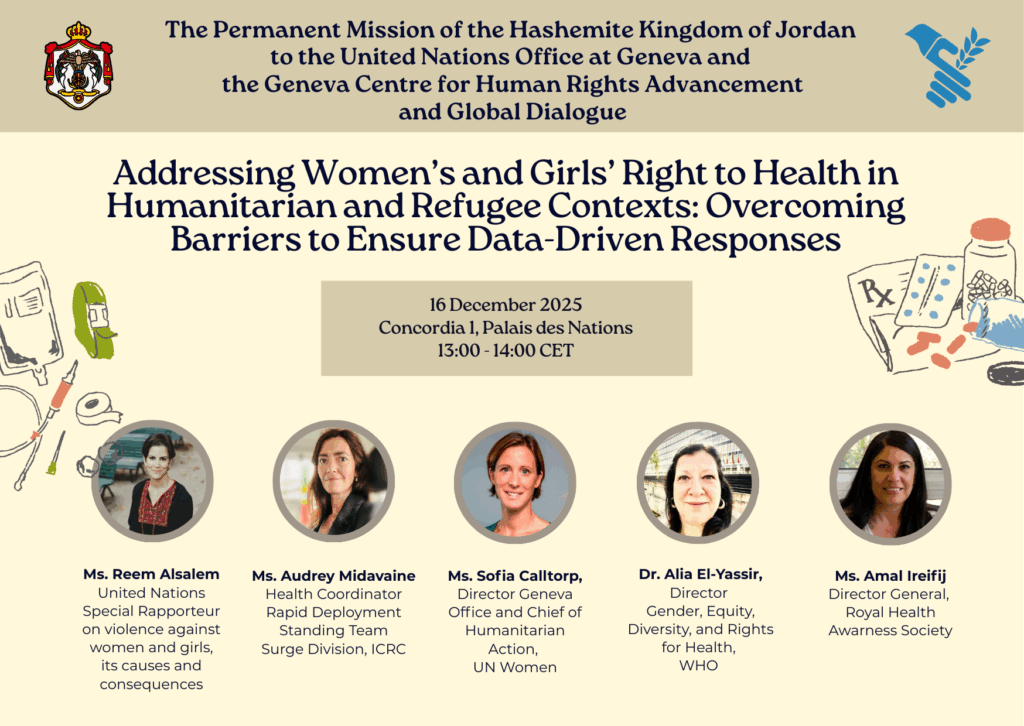
The Permanent Representative of Jordan delivered the introductory allocution, followed by statements from the panellists. The speakers observed that in contexts of humanitarian crises and forced displacement, the continuity, accessibility, and quality of health services for women and girls depend on effective coordination, adequate resources, and ensuring safe environments that upholds their dignity and well-being, including education. Across all settings, women and girls continue to face disproportionate barriers to the full realization of their right to health. Expanding access to legal documentation, livelihoods, and inclusive spaces for health and psychosocial support is essential to enabling women and girls to fulfil their potential and contribute to the resilience of their communities.
Host countries play a critical role in ensuring access to essential services for both refugee and host populations. Inclusive national policies, supported by strong coordination between humanitarian and development actors, are key to ensuring that no one is left behind. In this regard, many host countries have taken steps to temporarily include refugee populations within national health systems and social protection frameworks, reflecting commitments to solidarity and shared responsibility.
Promoting the health and well-being of women and girls in humanitarian and refugee contexts requires inclusive, rights-based, and evidence-driven approaches that respond to the needs of both refugees and host communities. Strengthening national systems and data capacities remains central to achieving the objectives of the Global Compact on Refugees and advancing the 2030 Agenda for Sustainable Development.
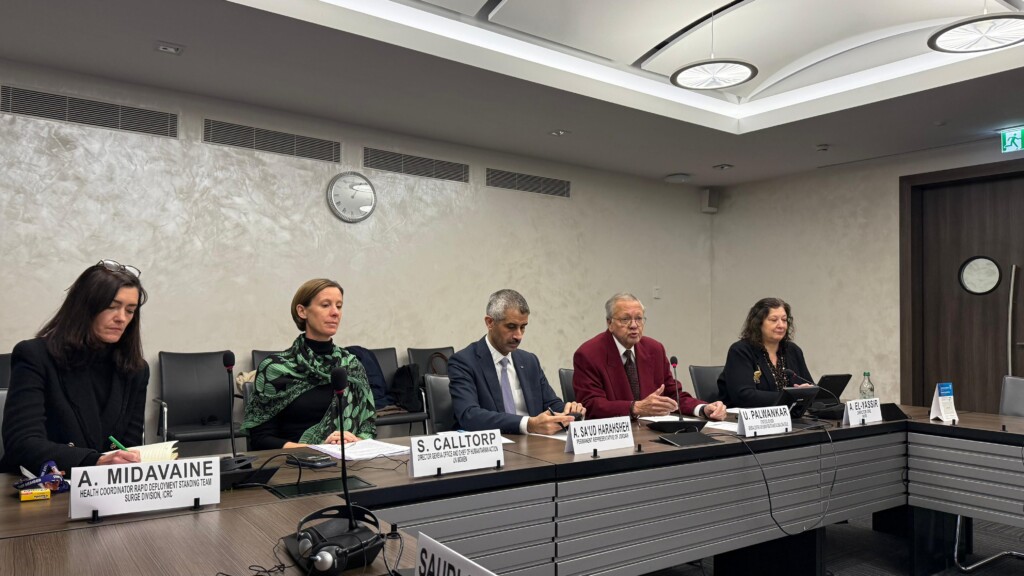
The event was attended with strong interest by several Permanent Missions, including Oman, Tunisia, Sierra Leone, the United Arab Emirates, Egypt, Qatar, the State of Palestine, the Russian Federation, Thailand, Saudi Arabia, the Netherlands, and Greece. During the lively Q&A session, civil society organizations present in the room provided pertinent and critical observations. In particular, questions were raised regarding the role of artificial intelligence in data collection and its potential to address persistent data gaps, highlighting the intersectional nature of the challenges discussed.
Furthermore, participants underscored the urgent need for increased investment in women-led organizations, recognizing their central role in delivering context-sensitive, trusted, and effective responses on the ground. Greater investment was also called for in national and disaggregated data systems, as well as in data collection and analysis capacities, to ensure that policies and interventions are informed by reliable evidence and adequately reflect the lived realities of women and girls in humanitarian and refugee settings. Particular emphasis was placed on the importance of country-specific approaches, acknowledging that health needs, barriers, and solutions vary significantly across contexts and must be addressed accordingly.